Blog Feed

Introducing Me

Hello! My name is Erika Bell. I’m from Raleigh, North Carolina, and I am currently an undergrad at the University of North Carolina at Chapel Hill. I am double majoring in Exercise and Sports Science and Psychology. After I complete my undergrad, I plan on taking a gap year to get more patient care hours as an EMT, then applying to graduate school to be a Physician Assistant. I also currently work for UNC Sports Nutrition under Rachel Manor, our school’s Director of Olympic Sport Nutrition. I am a member of the Carolina Pre-Physician Assistant Association and a subchair of the Organizational Donations committee of Carolina For The Kids, an organization that runs UNC’s Dance Marathon and raises money for the patients and families at UNC Children’s Hospital. In the small amount of free time I have, I enjoy running, spending time with friends and family, playing with my two dogs, watching movies, reading, and painting.

*All views and opinions on this blog are my own.

Humira: What It Is, How It Functions, and the Side Effects

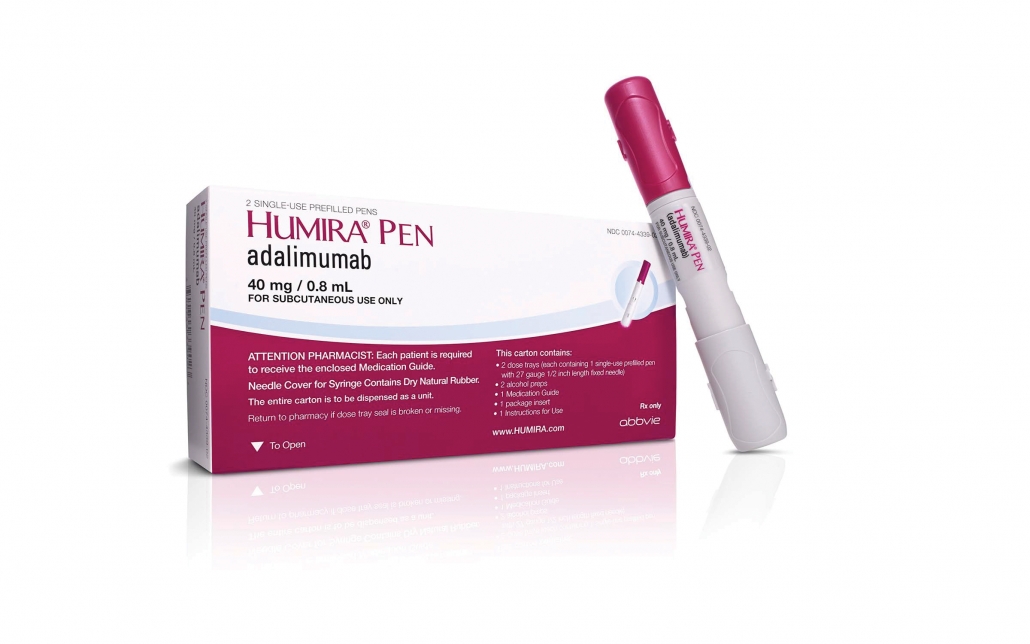
Since I have been talking a lot about antibodies recently, this week I have decided to talk about monoclonal antibodies, and more specifically, about a common medication that uses them, adalimumab. One recognizable brand of adalimumab is Humira, which is well advertised on TV and in magazines. But what does it help with? Well, adalimumab is a drug used to help treat different types of arthritis, such as rheumatoid arthritis, polyarticular juvenile idiopathic arthritis, and psoriatic arthritis. Rheumatoid arthritis is very common and occurs when the body’s immune system targets the connective tissues at the joints, causing the connective tissues to become inflamed and break down. This is typically very painful, as it can damage the joints over time. In addition, adalimumab can also help patients with Crohn’s disease. Crohn’s disease causes chronic inflammation in the digestive tract, which can cause abdominal pain and severe diarrhea, as well as fatigue, weight loss, and malnutrition from damage to the intestines.

Drugs such as adalimumab work because they use monoclonal antibodies. Monoclonal antibodies are antibodies that are grown in a lab so that they have the same constant and variable regions, and thus respond to the same thing and function in the same way. They are created by combining B cells and myeloma cells through chemical fusion and incubating them with aminopterin. Hybridomas, which are a fusion of B cells and myeloma cells, come from this and can be kept in a lab and harvested for their monoclonal antibodies. Adalimumab works to help fight different types of arthritis and Crohn’s disease because the monoclonal antibodies in the drug are injected to target tumor necrosis factor alpha, or TNF alpha, in the body. TNF alpha is a cytokine the body produces to create inflammation, and by the antibodies binding to the TNF, it helps to remove the TNF from the body and prevents the undesirable inflammation that is comes with these diseases. However, because this drug is interacting with the body’s natural immune system, a number of side effects and possible risks come with taking this drug.

Side effects of injectable adalimumab include:

  • headache
  • rash
  • nausea and/or stomach upset
  • swelling, redness, pain or itching at the injection site
  • nervous system problems such as numbness or tingling, problems with vision, weakness in the extremities, or dizziness
  • minor infections of the urinary tract, respiratory tract, and sinuses (because it suppresses the immune system)
  • hypersensitivity reactions including anaphylaxis
  • aplastic anemia or other blood related problems
  • increased risk of reactivation of hepatitis B virus in chronic carriers
  • increased risk of tuberculosis, sepsis, and fungal infections
  • increased risk of developing cancer
  • increased risk of liver problems

Because this drug interferes with TNF alpha in the body, this means it is also interfering with the body’s innate immune response in a negative way. When the body doesn’t have TNF alpha, it not only prevents some inflammation in the body, but it also means TNF alpha can’t engage in any of its other smaller functions in the innate immune system. It is for this reason that tumor cells are more likely to grow. Lack of inflammation also means that it can interfere with the body’s immune system in general, which is why there is also increased risk of type I hypersensitivity reactions and both minor and dangerous infections. Those who are chronic carriers of hepatitis B virus are also more likely to have reactivation of the virus because if the liver does not become inflamed when infected, it can’t fight off the virus as well as it normally can. However, for some people adalimumab’s pros outweigh the possible cons, as it prevents their chronic inflammation and allows them to live their life without chronic joint or abdominal pain. I guess that’s why they say you should “ask your doctor if Humira is right for you”.

Featured image from Pharmalive.

Antibodies and COVID-19: What We Know and What We Have Yet to Find

In my last post, I discussed the possible development of drugs that could help us treat COVID-19. For this weeks post, I wanted to talk about another source of hope for everyone: antibodies. Antibodies are Y shaped proteins that are part of our body’s immune system. When the body recognizes that there is something new or foreign in it, such as bacteria or a virus, antibodies help to neutralize or kill it, so we remain healthy and safe. But antibodies are all shaped differently, and in order to neutralize the foreign material, they have to have the corresponding shape to attach to it. So how do we get the right antibodies? Well, some antibodies can be passed on to us from our mothers while we are in the womb. And all antibodies can be produced after we first encounter the virus or bacteria. This is why we give vaccines, to help the body produce antibodies to what we are vaccinating against in order to better it fight off when we encounter it.

So you may be asking, what does all this have to do with COVID-19? If we can find who has the antibodies there is a possibility of people returning to work and everyday life sooner, of future generations having immunity, and of a vaccine we could use to create herd immunity and protect everyone. But before we know what we can do with the antibodies, we must first know that our bodies are producing antibodies to COVID-19. This can be done by finding the titer, or concentration, of the antibody molecules in our serum or plasma. We can also find the titer of different types of antibody molecules, such as IgM and IgG antibodies. If a high titer of IgM is found in a patient, it means that the person is currently positive for COVID-19 and their body has recently been exposed. If they have concentrations of both IgM and IgG antibodies, it means that they are still positive but their body is in the process of learning how to fight it off. Lastly, if a person mostly has IgG antibodies, this means that their body has already fought off COVID-19 and now has long-term antibodies against it. If we find people who have IgG antibodies, we could study their antibodies to determine how the body fights off COVID-19. The good news is that studies have shown that antibodies are being produced in response to COVID-19, and there are even animal studies that have indicated that the antibodies are preventing reinfection for at least a few weeks.

In terms of a vaccine, there are still many questions that need to be answered before we could produce one. Researchers aren’t sure yet if it will be inactivated or attenuated, or even a combination of subunit vaccines. This is still one of the many questions scientists are trying to answer. However, in the mean time there is certainly a certain amount of hope that could be found in antibody testing. Not just for answers to our scientific questions, but to help us determine who is infected and who has immunity, for however long that may be. If we can figure this out, it could be a major step in getting people back to their everyday lives and getting our world back in working order. So, if you’re interested, be sure to keep an eye out for new antibody research to read about. It may not provide every answer we need, but it could definitely be a key in providing some temporary solutions and be a major stepping stone to answer other big questions.

Featured Image by Macau Photo Agency on Unsplash.

A New Hope: An Explanation of COVID-19 Drug Development

So, COVID-19 has definitely taken the world by storm. The numbers of confirmed cases throughout the United States has skyrocketed over the past few weeks, and will likely continue to grow for a while. Certain states, including the one I live in, have closed all nonessential businesses, and even given stay at home orders. Most people are in self-quarantine and, if they’re lucky, many are working from home. Other people are losing hours at work or losing their jobs, and essential workers are under lots of stress, risking exposure or working to help take care of those infected. It is certainly a strange time we are living in, and at a time like this everyone is wondering when life will return to normal. It is for this reason that the search for medicine that can help fight COVID-19 is serving as a source of hope for millions of people. So what does that currently look like?

Well, when finding medicine that can help, there are two routes scientists can go. Researchers can use medicine we have already developed and see what would work best to fight this virus, as they can see what is comparative between this virus and other known antigens. Or, they could work to develop a new drug, one that is designed specifically for COVID-19. In terms of using drugs previously developed, there have been many headlines about researchers considering various possible cures. One in particular that has really gotten people’s attention in the past few days is Avigan and its generic version, Favipiravir, an antiviral that was developed in Japan. Although I haven’t seen an explanation of how it actually works, which is incredibly frustrating, there is evidence that it has previously helped to fight a number of viruses, including Ebola and influenza. It is now being used in clinical trials to help treat COVID-19 patients in China and Turkey, and clinical trials of the drug in the United States is currently under discussion among government officials and the company that produces the drug. I do have many major questions about the drug, but there is hope in that, out of those who have already been given the drug in China, it has been shown to reduce recovery time and the amount of time patients have had dangerously high fevers. Other researchers are looking into many other previously developed drugs, such as ones that have been used to treat HIV or malaria.

There is also a large amount of researchers who are on the forefront of new drug development, made to fight this exact virus strain. According to the FDA, there are currently 10 therapeutic agents in active clinical trials and another 13 in the planning stages in the United States. There are also researchers working around the world and collaborating together to help find a drug that will help. One example is APNO1, a drug developed by a collaboration of scientists and companies in 3 different countries. They discovered a protein on the cell membrane, called ACE2, is a key receptor for this type of virus. The drug has been successful in treating the virus in engineered replicas of human tissue, and is soon to be tested in human clinical trials.

In summary, there are many researchers around the world working to find a drug to help treat those infected with COVID-19. There are also many researchers hoping to create a vaccine to prevent the spread of the virus. However, because this strain of virus is entirely new to us, there are still a lot of questions that need to be asked and answered. Just like in many other parts of our lives right now, there are a lot of uncertainties. However, I think we should find hope and comfort in knowing that scientists and drug companies around the world are all working to find a way to help.

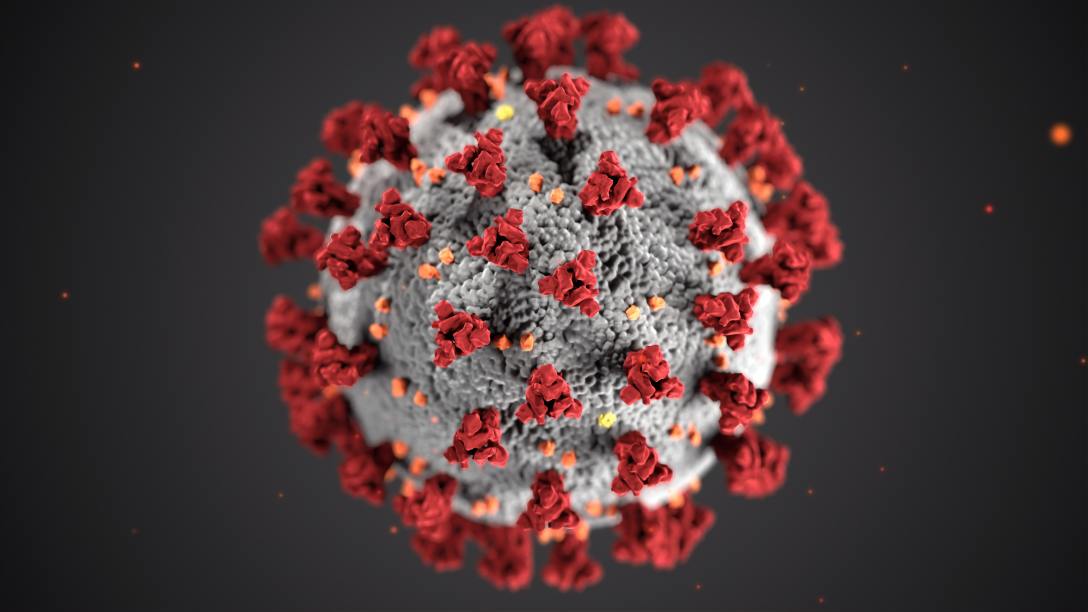
Featured image by CDC on Unsplash.

CAR T Cell Therapy: A Discussion of the Emerging Cancer Treatment

You may be wondering what CAR T Cell therapy is, right? To explain how the therapy works, let me first explain what T cells are. T cells are a type of lymphocyte, a form of white blood cells that play a role in your body’s adaptive immunity. T cells mature in the thymus, and are typically found in lymph nodes, other lymphatic tissues, or circulating in the blood. On their surface, T cells have receptors that only recognize specific epitopes, which are a specific part of antigens that are recognized by antibodies, B cells, and T cells that often triggers an immune response. The fact that the T cell receptors only recognize specific epitopes is an important piece of how different T cell therapies work, as T cells can be modified to respond to the specific epitopes we need it to respond to.

Because T cells can be found in the blood, T cells are collected through a process in which blood is collected from a patient, the T cells are separated and removed from the blood, and then the rest of the blood is put back into the patient’s body. From there, the T cells are brought to a lab where they are altered to have a special type of receptor, a chimeric antigen receptor, or CAR for short. The chimeric antigen receptors help to improve T cell recognition of cancer cells, which helps the T cells become activated and kill the cancer cells. In other types of T cell therapy, they still alter the T cells but they alter them to have whatever kind of receptor they need for their purpose. After the T cells are altered to have the CAR, they are grown in the lab so that lots of the T cells are produced. These CAR T cells are then introduced back into a patients body after the patient undergoes chemotherapy, and the CAR T cells continue to multiply and attack the cancerous cells in the body. Once in the body, the CAR T cells can continue to circulate and multiply, which means that they can also help fight any returning cancer and can help to keep cancer patients in remission.

While this does sound like a great way to treat cancer, it is also important to note that this type of treatment is very new. At this time, this therapy is mainly being used to treat lymphoma and certain blood related cancers. There are a lot of different side effects of the treatment including neurological issues, anemia, neutropenia, and cytokine release syndrome, which can cause all kinds of issues in the body and in some cases can be life threatening. In addition, in order to treat some of these side effects, the patient would need to take more drugs which may have additional side effects. Because it is a newer treatment and requires a lot of equipment and work, the CAR T cell therapy can be extremely expensive, with one website estimating that it could cost as much as $375,000 for treatment, not including other related expenses. While there still isn’t information on the long term success of the treatment, patients in clinical trials have seen an 80% complete or partial response rate, meaning some or all of their cancer cells have been killed, and an 80% remission rate. Overall, there are unfortunately a lot of side effects and associated costs for this treatment, and while this is new kind of treatment, the idea of the treatment certainly shows a lot of promise.

Featured image by National Cancer Institute on Unsplash.

March Madness: The Kind We Weren’t Expecting

Alright, so there’s no NCAA basketball tournament. Or NBA, or NCAA sports, or Olympics for that for matter. Right now, it seems like every single sport is cancelled. I can’t even go outside and go for a run without the pollen killing me. So what do we do in a world without sports? This week, rather than the normal disease and microbiology talk, I will be giving an update on my own life and giving tips and suggestions on how to stay busy and sane during this time of self-quarantine.

In case you haven’t read my “Introducing Me” post, here is some background information about me. I’m currently in my junior year of undergrad at UNC, I work for UNC Sports Nutrition, and I spend a lot of my time doing classwork and volunteering for Carolina For The Kids, a nonprofit that provides emotional and financial support for the patients and families at UNC Children’s Hospital. Also, my favorite ways to spend my free time include running, spending time with friends and family, watching movies, reading, and painting. So in case you haven’t already guessed, this whole COVID-19 situation has really changed a lot of things about my life right now. My university has completely shut down and classes have moved online, making classes even more stressful. In addition, because there are no athletes on campus and no NCAA spring athletics, I couldn’t go in for my job and there wasn’t a way for me to work remotely. Luckily though, because I’m a work study student, the school is still giving me what would be my average or otherwise expected pay for the rest of the semester. So I can’t really go to work, but at least I still have some income. In addition, CFTK’s Dance Marathon had to be cancelled, so instead of the 24 hour no-sitting, no -sleeping marathon, we had to host our marathon virtually and fundraise through social media. And to top it all off, my boyfriend moved out of state and I was visiting and helping him set up after the move when he found out that his coworker, someone who we both had come into contact with frequently, started showing symptoms of COVID-19. My roommate works in the UNC hospital system and my mom has just been recovering from pneumonia in both lungs, so I couldn’t return to my apartment or my mom’s house, and unfortunately in the state my boyfriend and his coworker are in, they are only testing people with severe symptoms, meaning the person showing symptoms that we were exposed to can’t get tested for COVID-19. So needless to say, my boyfriend and I are in self-quarantine and will be for a while.

Everyone during COVID-19. Meme from this article.

That being said, aside from the loads of school work I am now doing online, I have had a bit of time on my hands. First, I’d just like to say that practicing gratitude, and being grateful for the things I do have during this crazy time, has really helped me stay sane. At first, it felt like everything sucked because my school schedule was a mess, the event I spent a year helping to plan was cancelled, I couldn’t go to work, and I couldn’t even go home to hug my mom or sleep in my own bed. But once I accepted that, knowing I’m in quarantine for the good of my family and others and knowing that I still have a lot to be thankful for, it definitely became a lot easier and being under quarantine just feels like a lot of regular days spent inside. Plus, I get another two weeks with my boyfriend before I leave and we’re a state apart, so that was definitely a silver lining. But, I’m sure you’re not really here for gushy comments about time with my significant other, so let’s get down to the important stuff: recommendations for ways to spend all your new free time.

More memes can be found in this article.

Unless you’ve somehow completely avoided social media lately, you’ve probably seen that Tiger King on Netflix is taking the world by storm. On the off chance that you haven’t binged that yet, I’d highly recommend it. I mean really, how is a gay, redneck, drug dealing, tiger breeding zookeeper and his world of big cat owning enemies not entertaining? I’ve also been watching Breaking Bad and re-watching Dexter and Grey’s Anatomy, and they will never not be good. Aside from the musical episode of Grey’s where Callie is dying and everyone is singing. That episode will always be skipped, it’s a rule. If you’re getting bored of TV, games are always a good way to go. My boyfriend has been enjoying Destiny 2, and many of my friends are playing the new Animal Crossing game, New Horizons. And good old Scattergories, Catan, and Scrabble are also good if you’ve got some roommates or family members you’re in quarantine with. If you’re unlike me and don’t suffer from bad seasonal allergies, you could go for a walk, go for a run, or even use sidewalk chalk and your driveway to map out the logistics of how exactly Carole Baskin fed her husband to the tigers and got away with it. Just whatever you do to have fun, be safe, don’t invite anyone over, and be sure to follow all government orders and CDC recommendations regarding COVID-19. Otherwise, we won’t be stopping the exponential spread of the virus and it will be a lot harder for me, among many others, to eventually safely travel or go home. And I would really like to pet my dogs.

Featured image by JESHOOTS.COM on Unsplash.

Pandemic and Panic: a Discussion of COVID-19

Well, I suppose it’s time to address the elephant in the room. Or in this case, the virus we’re hoping to keep out of the room, COVID-19. Most people know it as coronavirus, but to only call it coronavirus is technically incorrect. COVID-19, the virus that is currently taking the world by storm, is actually just a new strain, or type, of coronavirus. To further clarify: It is NOT a type of flu or cold virus. It is a new strain of a structurally different type of virus, coronavirus. Signs and symptoms of COVID-19 most commonly include a fever, dry cough, tiredness, and difficulty breathing in severe cases. It is a virus that attacks the respiratory tract.

Unfortunately, over the past few weeks the spread of COVID-19 has officially become a pandemic. At the time I’m writing this, there have been 294,110 confirmed cases and 12,944 deaths from COVID-19 across 186 countries, areas, or territories. Out of these numbers, 15,219 confirmed cases and 201 deaths were in the United States alone. However, these numbers will likely continue to greatly increase over the next few weeks, as more people will begin to show symptoms and the amount of testing is increasing. So far China has been hit the worst, with 81,499 confirmed cases and 3,264 deaths. Italy also has the largest death rate from the virus, as they have had 53,578 confirmed cases and 4,827 deaths. This is likely because Italy has a high population of elderly adults who will have a harder time fighting off a virus their body has no antibodies for. Again, these numbers are likely to fluctuate over time, but they give the most accurate picture of what is happening at the time I am writing this blog. If you are interested in the numbers, be sure to follow the CDC or WHO for their official reports.

Now you may be wondering, or you may know someone else that is wondering, why is the world so worried about this? Why are we shutting things down and encouraging quarantine? Why should I be worried about it if I’m young and have a good immune system? Well, the reason why everyone is worried about the virus is because there is something to worry about. While it isn’t something worth going absolutely nuts about (looking at you, toilet paper hoarders), it is something we need to do our best to contain and prevent the spread of. The reason we are most worried about the virus is because of its long incubation period. This means that, unlike when we contract something like the flu and know within the first day or two we have come into contact with the virus, we can be infected with COVID-19 for anytime up to two weeks before we begin to feel the effects and know we are infected. This means that we can be infected for up to two weeks and unknowingly spreading the virus to anyone we come in contact with or anyone who touches the same things we touch. While this might not mean anything to us, it can mean the world, and even life or death, to others who we come into contact with during this period, or to someone who comes into contact with the person we came into contact with. For example, if you were walking around unknowingly infected, coughed or sneezed near a man, but then that man went home to take care of his elderly parents or immunocompromised child, you could have played a part in spreading a virus that some people’s bodies cannot fight off. Point blank, your spring break trip or night out at the bars is not worth the potential of someone else down the line becoming infected and dying. Additionally, because this strain of virus is new, no one has antibodies to it. When anyone becomes infected with it, it will likely be very uncomfortable and tiring, as our bodies have to work even harder than normal to rid ourselves of the infection. It is for THESE reasons, not unfounded panic or anything like that that the CDC, WHO, etc., have all suggested social distancing. It is also because of these reasons that many other changes are being made in areas affected by the virus, such as universities transitioning to online classes, bars and restaurants being closed, gatherings of more than 50 people being banned, etc.. Social distancing and self quarantine are some of the most important things we can do to slow down the spread of the virus so that it doesn’t go beyond what our healthcare infrastructure can handle. This means that less people are infected or dying, and more people will get the healthcare they need if they are a severe case or immunocompromised.

While I’m sure this blog hasn’t answered every question you may have, I hope it has at least explained some things and given answers to some questions. I hope that, in the very least, you have learned what COVID-19 is, how it has become a pandemic, and why social distancing and self quarantine is important. While at a time like this, with so many things happening and so many uncertainties, please do not panic. The best thing you can do is relax, spend as much time at home as possible, and limit your contact with others. Be sure to wash your hands frequently and avoid touching your face. Instead of going out, watch some movies, donate to charity or other people in financial need, spend time with your immediate family that lives with you, and do your part to prevent the exponential spread of the virus and preventable deaths. If you have any more questions, please consider viewing the websites of the CDC or WHO for more information.

Featured photo by Kelly Sikkema on Unsplash.

HPV: What It Is and How We Can Prevent It

♫ Let’s talk about sex baby, let’s talk about HPV♫ In all seriousness, HPV is something that needs to be talked about. All sexually transmitted infections and diseases need to be talked about more so that people know how to prevent them, recognize them, and educate others. In this post, I will be discussing Human Papillomavirus, or HPV, what it is, how it is spread, and how to prevent its spread.

Human Papillomavirus is a virus that can cause infections in internal and external genitalia. Some strains cause papillomas, or wart-like growths on the genitals, while other strains can cause lesions on mucosal surfaces, which have been shown to play a major role in the development of cervical cancer. Many people can have HPV without showing signs or symptoms, however the most notable sign is the presence of warts on the penis, anus, or at the opening of the vagina. Precancerous lesions can only be detected through testing of cervical tissue. Certain strains spread through sexual activity can cause other types of cancer, such as oral, penile, vaginal, and oral cancers. Out of 100 different types of HPV, at least 40 are spread through sexual contact and 15 of them are strongly associated with various types of cancer. This, along with the warts that no one wants, is why protection against HPV is so important. Because people can be asymptomatic when they have it, protection and prevention is crucial.

While there are treatments for the warts, the warts caused by some HPV infections can be reoccurring. All women are also advised to get a Pap smear every 12 months to determine if they have any abnormal cells or lesions caused by HPV. In terms of prevention, the best ways to prevent HPV are by practicing the AMCs of prevention, abstinence, monogamy, and condoms. Condoms are helpful in preventing the spread of HPV, however they aren’t completely effective against it, as HPV can be spread by exposure to areas of skin that aren’t covered by a condom. In terms of vaccinations that can prevent HPV infection, there are a few different vaccines available that aim to prevent certain types of HPV. For example, one of the most popular vaccines, Gardasil 9, protects against the HPV types that cause the majority of genital warts and associated cancers. Gardasil 9 is part of the vaccine schedule used in the United States, and is scheduled to be given around age 11 or 12, however it can be given as early as 9 years old and as late as age 26. However, given the nature of transmission, it is most effective if you get the vaccine before becoming sexually active. While some vaccines are still being developed or improved, there has been some discussion in the medical academic world about the risk of certain HPV vaccines and if the harms outweigh the benefits. While there is a risk of harm when getting the vaccines, the benefits of not becoming infected by HPV, not getting the associated warts or cancers, and not asymptomatically spreading it to others should outweigh the risk, and it is best for your own health and the greater public’s health if you do receive the vaccination.

Still, making sure people get the vaccinations and practice the AMCs of prevention is only part of the battle. Another important part of preventing HPV spread is by promoting disclosure and reducing the stigma related to STIs. In a recent study, scientists found that out of the group of women studied, 60% of HPV-positive women felt that disclosing their HPV result was “risky”. They weren’t sure how their partners would respond, and were unsure how, when, and to whom they should communicate their result to. Reducing stigma and promoting disclosure is just as important in prevention, as it will in turn promote other prevention techniques, promote vaccination, and cut down on the spread of HPV. If you are worried about HPV, as everyone should be, the best way to prevent yourself and others from getting it is to vaccine yourself and your children when they are of age, by practicing safe sex, and by getting regular testing/pap smears. And if you do have HPV, be sure to continue practicing safe sex and let your partner(s) know before engaging in sexual activity. (Hint: this advice goes for all STIs and STDs!!). Salt-N-Pepa may have sang about all the good things and the bad things that may be, but HPV, genital warts, and avoidable cancer should certainly not have to be included.

Featured Image by Reproductive Health Supplies Coalition on Unsplash.

Antibiotics: Why Selective Use Is More Important Now Than Ever

Antibiotics. They’re incredibly important when we have a bacterial infection, and we as a society use them often. But are we using them too often? In this post, I will discuss what antibiotics are, when and how they are used, and what can happen if we, as a society, use them too often, or when they aren’t necessary for improving our health.

Antibiotics are a type of medicine that consist of a natural compound, such as one found in molds or certain types of bacteria, that can be used to inhibit the growth of or kill other microorganisms. In medicine, we use them when we are sick from bacterial infections, such as pneumonia or urinary tract infections. Antibiotics function by attacking parts of the structure or interrupting the chemical processes of bacteria that don’t occur in human cells, which is how it can stop the growth of or kill bacteria without hurting ourselves. However, some bacteria is resistant to antibiotics, meaning their growth can not be stopped and they can not be killed by antibiotics. Antibiotic resistance can come from either an innate resistance, meaning some bacteria are resistant to the medicine because of their natural structure or biochemical processes, or by acquired resistance, meaning their DNA has changed by means of mutation or horizontal gene transfer. This means that some bacteria can be treated by antibiotics but can become resistant later, thus rendering the antibiotic we had for it useless. Bacteria that have become resistant to most of our available antibiotics are called superbugs, and they are dangerous because they cause infection that can not be treated or eliminated.

From this information, I’m sure you could be wondering a few different things: If more bacteria are becoming resistant to antibiotics, does that mean resistance is on the rise? What is causing this? Why does it matter to me? The fact is that, YES, antibiotic resistance is on the rise! It is increasingly becoming a problem, as we are losing the medicine we have available to fight bacterial infections more rapidly than we can invent or find more. There is a reason why the WHO listed antimicrobial resistance as one of the top 10 threats to global health in 2019. This matters because we are losing medicine that should work, meaning there are more and more people who won’t be able to be treated and cured from their bacterial infection. This means that more people can die if their infection can’t be treated. In fact, the CDC reported antibiotic resistant bacteria causes at least 2.8 million infections and 35,000 deaths in the United States each year and that the annual number of deaths from antibiotic resistant infections has doubled since 2013. The number of germs listed as urgent threats on the CDC’s antibiotic resistance threats list has also increased from 3 to 5 since 2013.

But what causes it and what can we do to help ourselves? Well, when we take antibiotics it stops the growth and kills most of the bacteria in our system. However, some of the bacteria that is resistant to the antibiotics will live, which means that they can continue to grow or spread. By taking lots of antibiotics, we are killing the weak bacteria but the more resistant bacteria continues to flourish and spread, meaning the infections we are used to treating will increasingly become resistant to the medicine we have to treat them. In addition, the use of antibiotics in animal food production is an issue, as antibiotics are often fed to animals to create more meat on their bodies before we kill them for food. In order for meat to pass as antibiotic free, it means that antibiotics can’t be in the system of animals at the time of sale, however this doesn’t mean that the animals haven’t grown in the presence of antibiotics. When the antibiotics cycle through the animals, the most resistant bacteria live and go into their feces, which is then spread on fields as fertilizer. All of this means that the bacteria that ends up around our food and in our bodies is the bacteria that is most resistant to antibiotics. The good news is that, because of the urgency of this threat, many governments and global health organizations are starting to ban the use of antibiotics in the meat industry and implementing new medical policies, encouraging a stricter use and lower prescription rate of antibiotics.

If you’re wondering what you can do to help alleviate this threat to global health, be sure to only take antibiotics when they are prescribed and always follow the instructions given with the prescription. Skipping doses, stopping the course of treatment early, or taking some you have left over the next time you feel ill can not only interfere with your ability to become better, but it increases the chances of bacteria becoming resistant and spreading to others. In addition, always see a doctor when you are sick, as you may not know if it is a bacterial or viral infection and be sure to remind your friends and family to do the same. The best way to limit the prominence of antibiotic resistant bacteria is by limiting unnecessary antibiotic use! Because antibiotic resistant bacteria is dangerous to our health as a society, it is in our best interest to do everything we can to prevent the spread and advancement of it.

Featured photo by Mark Fletcher-Brown on Unsplash.

Polio: A History and a Hope

Previously:

So let’s talk about polio. For those of you who don’t know what it is, or who only know of it because you know our 32nd president, Franklin D. Roosevelt, had it, poliomyelitis is a virus that enters the body orally, infects the cells that line the throat and intestinal tract, then invades the bloodstream and nerve cells. Because of this, the signs and symptoms of polio include headache, fever, stiff neck, nausea, pain, and muscle spasms. It can also lead to paralysis. For poliomyelitis, there are three serotypes, or groups of strains with a specific antigenic structure, and two different types of vaccines to protect against it. The IPV, otherwise known as the Salk vaccine, was developed in the 1950s and protects against all three serotypes using inactivated virus. The OPV, known as the Sabin vaccine, is an oral vaccine that was developed in 1961 and has attenuated strains of the virus that can replicate the cells that line the throat and intestinal tract, causing a mucous response and mucosal immunity. Because of this, the OPV is considered to provide better herd immunity, as it can fight the virus as soon as it enters our system, rather than later on when we’ve had more time to spread the virus. It is also cheaper. However, the attenuated viruses can also mutate and become virulent. And the downside to IPV is that it doesn’t produce the mucosal immunity, so it can still be easily spread to others. In order to create the most effective method of preventing Polio, the United States adopted a strategy of using both vaccines, the IPV first to protect the child being immunized, then the OPV to boost the child’s mucosal immunity and herd immunity. This worked because by 1979 the United States was free of wild-type polio, and it had been eliminated in the western hemisphere by 1991.

Now:

As of 2015, the second serotype of Poliomyelitis was declared globally eradicated. We now use an OPV that has only the serotypes 1 and 3! And the United States has been completely polio free for approximately 27 years! However, in some parts of the world, Polio is still an issue. For example, in many countries that are not yet free of Poliomyelitis, it is not because they aren’t vaccinated but because there are few cases of the attenuated OPV mutating and becoming virulent. One of the latest solutions to this issue is a new oral polio vaccine, called the nOPV2, is being researched. Scientists have located which part of the virus’ genome in which most of the mutations that make it virulent occur, and have edited eighteen nucleotides at that part of the genome to hopefully prevent the virus from mutating and becoming virulent again. This vaccine is currently still under testing, but if it works it could be a key player in preventing vaccine-derived polio and finally eradicating polio from our planet.

However, in order for us to completely eradicate the virus, we must remember how we have gotten this close to begin with. We need to continue vaccinating against it so that everyone has immunity and our herd immunity is high. If we stop vaccinating against it, it could leave room for the virus to begin to reoccur in areas of the world that have already eradicated it. We must continue to vaccinate, even if there is a risk of vaccine-derived polio, because the eventual goal of eradicating polio altogether is much more important for the world’s health and future. And if we can eliminate vaccine-derived polio, as we may be on the verge of doing, we are one big step closer to our end goal.

If you have any questions about who should be vaccinated and when they should be vaccinated, visit the CDC Polio vaccination site or talk to your doctor or child’s pediatrician for more information. People who should receive the vaccine include includes infants, toddlers, preschoolers, older children who have not yet received the vaccine, or adults who are at an increased risk due to potential exposure.

All the Small Things: Talking about our Microbiome

All the small things. While most would hear this phrase and think of one of California punk rock band Blink 182’s greatest hits, I’m actually talking about something entirely different: microorganisms. Microorganisms are sometimes thought of in a negative way, likely because of the many harms they can cause when they become unbalanced in our body. But we often don’t give them the credit for the ways they can also help within our body. And some don’t do either, as some microorganisms have a commensal relationship with us. For this blog, I will be talking about the microbiome and the many ways it can function to help or hurt us.

When I talk about the microbiome in this post, I am referring to the human microbiome, which is the collection of microorganisms that are living and growing in people. From birth, we begin to collect the microorganisms living inside and on us, and by the time we are adults we contain so many microorganisms that they actually outnumber human cells by 10 to 1. Research has shown that microorganisms in our microbiome benefit us by protecting us against infection, aiding in digestion, and producing things like vitamins that are important for our health. However, from research we also know that some microorganisms can have a parasitic relationship with humans and when they begin to grow, or when we lose a lot of the microorganisms that protect us by taking antibiotics, we can become infected or even have an infectious disease.

Because our microbiome can create an incredible impact on our daily functions, it is something that is being constantly researched, both in how it benefits us or can cause us harm. For example, Gasparrini AJ, et al has recently discovered that infants who were treated with antibiotics for a prolonged time (21 months to be exact) were found to have a less diverse microbiome and bacteria with more antibiotic resistant genes than that of an average child of their age. This opens up the doors for much more research including if this prolonged antibiotic treatment suppresses the growth of beneficial microorganisms or if it could lead to greater issues with treating bacterial infections later in life. Another possible way that our microbiome can impact our functioning is with our allergies and allergic reactions. After discovering that children who were allergic and not allergic to cow milk had different microbiomes, scientists recently transplanted the gut microbes of non-allergic children to allergic mice and found that, when exposed to milk, the mice with the transplanted microbes didn’t experience allergic reactions. This is also incredibly important and has led to a need for further research, as there is now a question as to if microbiome-modifying therapies could be used to prevent or treat food allergy.

Overall, it’s incredibly hard to summarize all the ways our microbiome interacts with us. And part of this is because there is still so much research that is currently being done or is yet to be done. But we do know some things. Sometimes microorganisms don’t do anything, sometimes they harm us, and sometimes they help us, and all of this depends on what type of microorganism they are, what other microorganisms are present, and the conditions that the body is in. These many factors can all come together to influence what kind of impact we are experiencing. Microbiome research is important and is becoming increasingly relevant because sometimes in order to understand the bigger picture, we must understand the smallest pieces.