
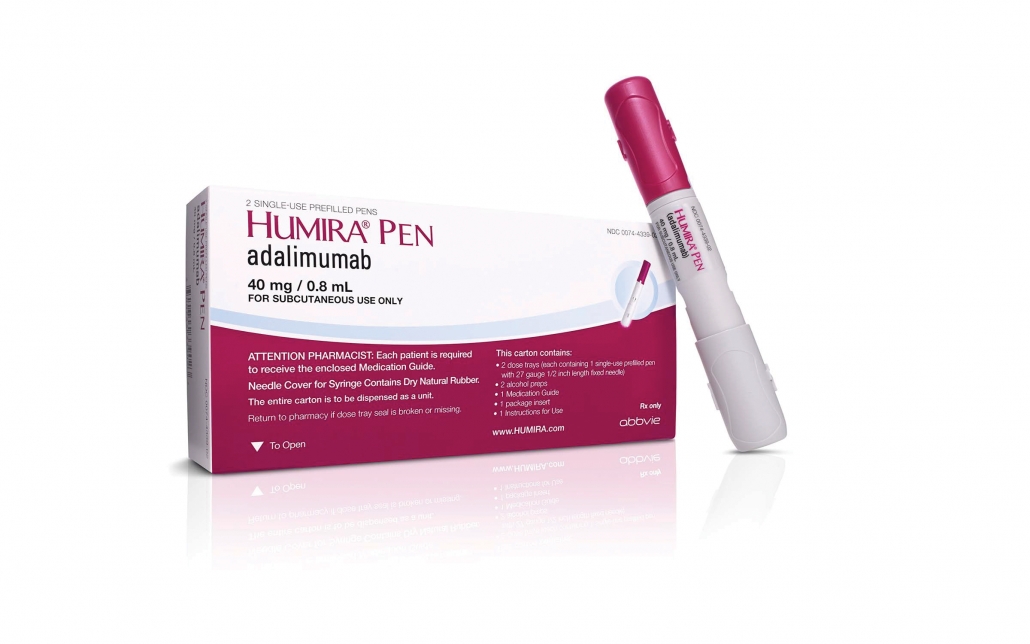
Since I have been talking a lot about antibodies recently, this week I have decided to talk about monoclonal antibodies, and more specifically, about a common medication that uses them, adalimumab. One recognizable brand of adalimumab is Humira, which is well advertised on TV and in magazines. But what does it help with? Well, adalimumab is a drug used to help treat different types of arthritis, such as rheumatoid arthritis, polyarticular juvenile idiopathic arthritis, and psoriatic arthritis. Rheumatoid arthritis is very common and occurs when the body’s immune system targets the connective tissues at the joints, causing the connective tissues to become inflamed and break down. This is typically very painful, as it can damage the joints over time. In addition, adalimumab can also help patients with Crohn’s disease. Crohn’s disease causes chronic inflammation in the digestive tract, which can cause abdominal pain and severe diarrhea, as well as fatigue, weight loss, and malnutrition from damage to the intestines.
Drugs such as adalimumab work because they use monoclonal antibodies. Monoclonal antibodies are antibodies that are grown in a lab so that they have the same constant and variable regions, and thus respond to the same thing and function in the same way. They are created by combining B cells and myeloma cells through chemical fusion and incubating them with aminopterin. Hybridomas, which are a fusion of B cells and myeloma cells, come from this and can be kept in a lab and harvested for their monoclonal antibodies. Adalimumab works to help fight different types of arthritis and Crohn’s disease because the monoclonal antibodies in the drug are injected to target tumor necrosis factor alpha, or TNF alpha, in the body. TNF alpha is a cytokine the body produces to create inflammation, and by the antibodies binding to the TNF, it helps to remove the TNF from the body and prevents the undesirable inflammation that is comes with these diseases. However, because this drug is interacting with the body’s natural immune system, a number of side effects and possible risks come with taking this drug.
Side effects of injectable adalimumab include:
- headache
- rash
- nausea and/or stomach upset
- swelling, redness, pain or itching at the injection site
- nervous system problems such as numbness or tingling, problems with vision, weakness in the extremities, or dizziness
- minor infections of the urinary tract, respiratory tract, and sinuses (because it suppresses the immune system)
- hypersensitivity reactions including anaphylaxis
- aplastic anemia or other blood related problems
- increased risk of reactivation of hepatitis B virus in chronic carriers
- increased risk of tuberculosis, sepsis, and fungal infections
- increased risk of developing cancer
- increased risk of liver problems
Because this drug interferes with TNF alpha in the body, this means it is also interfering with the body’s innate immune response in a negative way. When the body doesn’t have TNF alpha, it not only prevents some inflammation in the body, but it also means TNF alpha can’t engage in any of its other smaller functions in the innate immune system. It is for this reason that tumor cells are more likely to grow. Lack of inflammation also means that it can interfere with the body’s immune system in general, which is why there is also increased risk of type I hypersensitivity reactions and both minor and dangerous infections. Those who are chronic carriers of hepatitis B virus are also more likely to have reactivation of the virus because if the liver does not become inflamed when infected, it can’t fight off the virus as well as it normally can. However, for some people adalimumab’s pros outweigh the possible cons, as it prevents their chronic inflammation and allows them to live their life without chronic joint or abdominal pain. I guess that’s why they say you should “ask your doctor if Humira is right for you”.
Featured image from Pharmalive.

 Erika Bell's MCRO 251 Blog